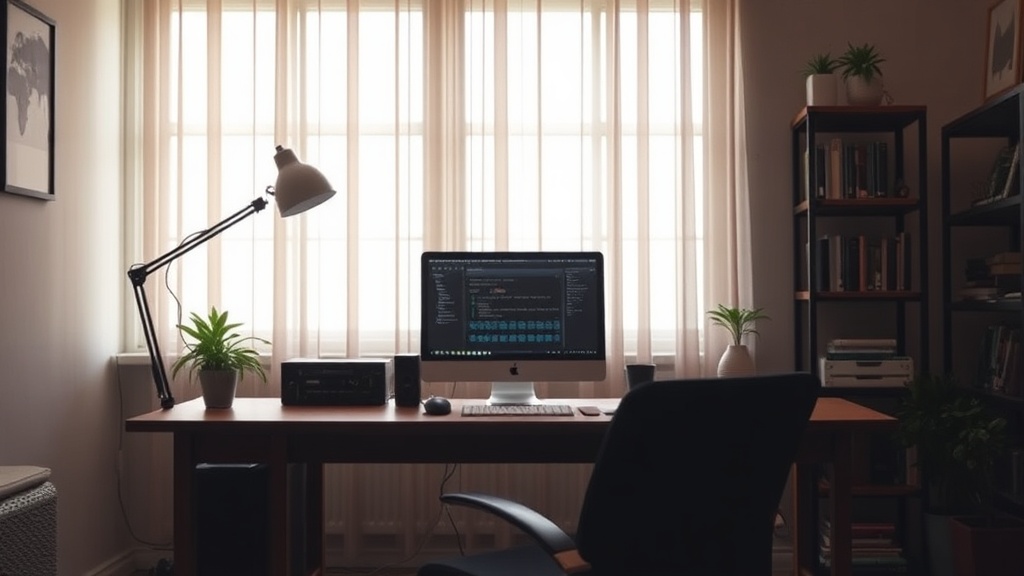
Why Your Home Office Setup Might Be Hurting Your Focus

What Makes a Workspace Actually Functional?
You'll learn why your current desk setup might be the reason you feel drained by noon and how to fix it through small, intentional shifts. It isn't just about having a pretty desk; it's about how your physical environment dictates your mental output. When your workspace is cluttered or poorly lit, your brain spends energy managing that chaos instead of focusing on your actual work. This post covers the mechanics of a functional workspace, from lighting to ergonomics, without the fluff.
Most people think a clean desk is the goal, but that's a mistake. A functional desk is one that supports your movement. If you're sitting perfectly still for eight hours, you're doing it wrong. A good setup allows for slight adjustments—moving your monitor, changing your chair height, or even shifting your keyboard position. If your setup is too rigid, you'll feel physical tension by mid-afternoon. This tension eventually turns into mental fatigue, making it even harder to stay on task.
Let's look at the basics. A desk that is too high or too low forces your shoulders into a tense position. If you find yourself hunching over your laptop, you're likely working on a setup that wasn't meant for long-term use. Even a small laptop stand can change how much strain you put on your neck. It's these tiny, physical adjustments that prevent that heavy, exhausted feeling at the end of a long workday.
How Can Lighting Change Your Productivity?
Lighting is often an afterthought, but it's one of the biggest factors in how you feel while working. Harsh overhead lights can cause eye strain and headaches, while a room that is too dim makes you feel sluggish. The goal is to find a balance that mimics natural light as much as possible. If you can, position your desk near a window, but be careful with glare on your screen. Glare is a silent productivity killer; you might not notice it immediately, but your eyes are working much harder to see through the reflection.
If you don't have much natural light, look into task lighting. A dedicated desk lamp with a warm, adjustable bulb can create a sense of focus. It creates a visual boundary for your work area, telling your brain, "This is where the work happens." Too much light can be just as bad as too little, so don't overdo it with bright, blue-toned bulbs that might keep you wired when you should be winding down. A well-placed lamp can make a huge difference in how much energy you have left at 4:00 PM.
Research on how light affects our circadian rhythms is quite clear. According to the Sleep Foundation, light exposure plays a massive role in our sleep-wake cycles. If your workspace is flooded with bright, blue light all day and then you're exposed to more at night, your body never gets the signal to rest. This can lead to a cycle of poor sleep and even worse focus the next day. Aim for a setup that respects your body's natural rhythms.
Is a Minimalist Desk Always Better?
There is a common misconception that a minimalist desk—one with nothing on it but a laptop—is the peak of productivity. While reducing visual clutter is a good idea, a completely empty desk can feel cold and uninspiring. You need a few things within reach to feel comfortable. This might include a notepad, a specific pen you love, or even a small plant. A plant isn't just decor; it adds a bit of life to the room and can actually help improve air quality and mood.
The real question isn't how much stuff you have, but where that stuff lives. If you're constantly reaching for a charger or a notebook that is buried under a stack of papers, you're breaking your flow. Everything should have a dedicated spot. If it doesn't have a home, it's just clutter. A simple tray for your pens or a small drawer for your tech cables can keep your surface clear without making the space feel sterile or empty.
Building a Better Routine Around Your Space
Once you've sorted your physical environment, you have to manage how you interact with it. I've found that the way I treat my desk at the end of the day dictates how I feel the next morning. If I leave a mess of coffee cups and loose papers, I start the next day feeling behind. If I take five minutes to clear the surface and prep my notebook for the next morning, I feel much more in control.
Try this: at the end of your workday, do a "reset." Put the pens back, close the tabs on your browser, and clear the physical clutter. It's a way to signal to your brain that the work day is over. This is particularly important if you work from home, where the lines between "work life" and "home life" are incredibly thin. Without a clear physical and mental boundary, the stress of work can bleed into your entire evening.
If you find yourself struggling to stay focused even with a good setup, it might be time to check your digital environment. Much like a physical desk, a digital desktop filled with random files can be a distraction. Organizing your folders and keeping your desktop icon-free can reduce that subtle-but-constant mental load. It's all part of the same system of creating a space that actually works for you, rather than against you.
The Impact of Ergonomics on Long-Term Health
We often ignore the physical toll of sitting for long periods, but it's quite real. If you're working from a kitchen chair or a sofa, you're asking for back pain. A proper ergonomic chair isn't a luxury; it's a tool for your health. You want something that supports the natural curve of your spine. Even if you can't invest in a high-end office chair right now, adding a small lumbar support pillow can make a massive difference.
| Problem | Common Cause | Quick Fix |
|---|---|---|
| Neck Pain | Screen too low | Use a laptop stand or books |
| Wrist Strain | Keyboard too high | Use an external keyboard |
| Eye Fatigue | Poor lighting | Add a task lamp |
| Back Ache | Lack of support | Add a lumbar pillow |
The goal is to create a space that supports your body, not one that forces it to adapt. When your body is comfortable, your mind can actually stay in the zone. If you're constantly shifting in your seat or rubbing your neck, you're not truly working—you're just enduring the discomfort. Make these adjustments a priority, and you'll likely see a change in your daily energy levels almost immediately.