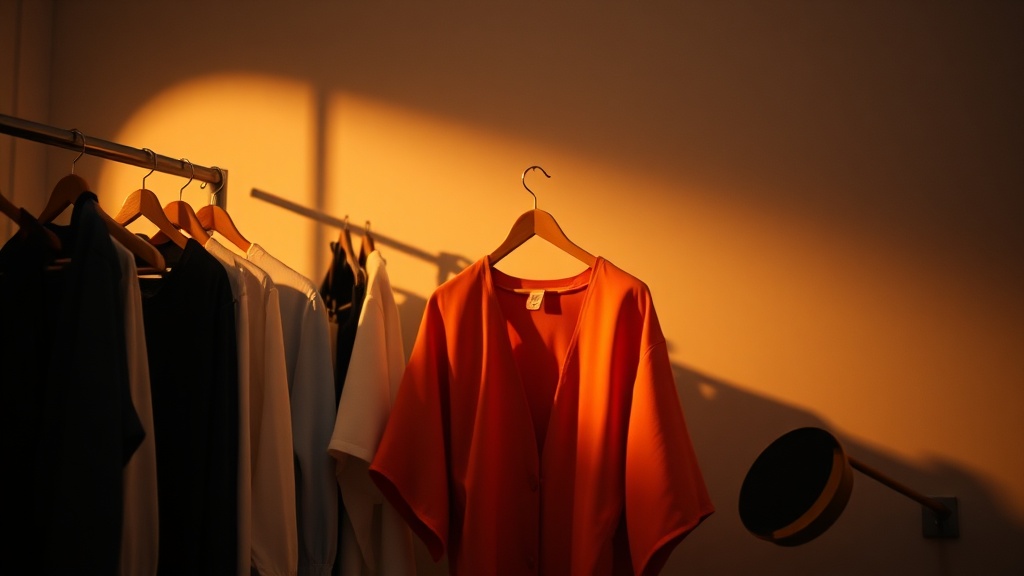
Why Your Minimalist Wardrobe Isn't Actually Making Life Easier

Most people believe that owning fewer clothes is the fastest way to reduce decision fatigue. They think a capsule wardrobe—a tiny collection of versatile basics—is the magic bullet for a stress-free morning. But here is the truth: a minimal wardrobe often creates a different kind of mental clutter. When you only own a handful of items, the pressure to make every single outfit look "perfect" increases. You aren't just picking clothes; you're managing a tiny, precious inventory where one laundry mishap or one mismatched texture can ruin your entire week's rotation.
The real issue isn't the number of items in your closet. It's how those items interact with your actual life. A collection of ten perfect white shirts might look great on a curated social media feed, but if you work a desk job in a drafty office in Edmonton, those shirts are useless. Minimalism for the sake of minimalism often leads to a closet full of things that look good but don't actually function for your daily reality.
Can a Capsule Wardrobe Actually Work for Busy People?
The short answer is yes, but only if you stop treating it like a math equation. A lot of influencers suggest picking a color palette and sticking to it strictly. While that helps with coordination, it often ignores the reality of human temperament. Some days you want to feel professional; other days, you just want to hide in a soft sweater. If your capsule is too rigid, you'll find yourself staring at a closet full of "approved" clothes and feeling absolutely nothing.
To make a small wardrobe work, focus on texture and layering rather than just color. A monochromatic outfit looks intentional when the fabrics vary—think a silk camisole under a heavy wool cardigan. This adds depth without needing more colors. If you find yourself constantly buying more because your "minimal" stash feels boring, you probably haven't accounted for seasonal shifts or different social settings. A functional wardrobe needs to be dynamic, not static.
How Do I Build a Wardrobe for My Actual Lifestyle?
Stop looking at what people wear in much warmer or much more formal climates. A wardrobe built for a summer in Los Angeles is useless if you live somewhere with a harsh winter. Instead, audit your last month of clothing. Which pieces did you actually reach for when you were running late? Which pieces did you avoid because they were uncomfortable or too high-maintenance?
A high-quality basic is worth more than ten cheap pieces that lose their shape after two washes. According to Vogue, investing in natural fibers like cotton, wool, and silk can significantly extend the life of your garments. This isn't just about being eco-friendly; it's about practical longevity. If your "minimalist" wardrobe is actually a collection of fast-fashion items that fall apart, you aren't actually reducing your burden—you're just creating a cycle of constant replacement.
Is It Better to Have Many Clothes or Fewer High-Quality Pieces?
This is the debate that never ends, but the answer is usually found in the middle. A massive wardrobe leads to decision fatigue and wasted space, yet a tiny wardrobe can feel restrictive and boring. The sweet spot is a "curated rotation." This means you have enough variety to feel like yourself, but not so much that you spend twenty minutes every morning hunting for a matching sock.
Consider this approach: instead of a rigid capsule, try a "modular" wardrobe. This involves having a core set of reliable staples (jeans, basic tees, blazers) and then a rotating selection of seasonal or trend-based pieces. This allows you to change your look without needing to overhaul your entire closet every six months. It also makes seasonal transitions much less painful.
When you're deciding whether to keep an item, ask yourself these three questions:
- Does this fit me comfortably right now (not in a hypothetical future)?
- Can I wear this in at least three different ways with things I already own?
- Does wearing this make me feel confident or just "fine"?
If the answer to any of these is a hesitant "maybe," the item is likely just taking up mental space. A functional closet should feel like a tool, not a chore. You want to reach in, grab something, and move on with your day without a second thought. If you're constantly second-guessing your outfit, your wardrobe is working against you, regardless of how many pieces are in it.
For more tips on sustainable living and intentional consumption, you can check out resources from the Good Housekeeping organization regarding home and lifestyle management. Managing your physical space is a direct reflection of how you manage your time and energy. Don't let your clothes become another item on your to-do list.